


Piece by Melissa Pereira, Staff Reporter
09/05/2026
Since the late 2023, the phrase “will AI take my job?” is searched over 100,000 times monthly worldwide. This is not a random fear of the unknown or the inability to grow and evolve as fast as the world we live in, but a serious concern milions of workers face with today’s technology. No matter the profession they are in, the question of wheater workers will be deemed irrelevant and a waste resources in a company hangs around their heads. This rising tide of concern underscores the urgency of understanding the complex relationship between AI and the future of workers, employment and job conditions for those already in a company or applying for one.

It seems everywhere you go, AI follows. It’s in your social media, your google search bar, you friend’s e-mail response and your workspace. Some see AI as a tool to increase produtivity, shift focus from irrelevant to more demanding and creative tasks and to help teams and projects. Others see it as a tool, created to help us grow mentally but is reducing cognitive thinking.
Most Companies will tell audiences the same story: That although AI will, certaintly change profissions and are, in fact, “already slithering into various industries, automating tasks and optimizing processes” as said by Medium Magazine, it is a good thing. “While some jobs face complete automation, the future of work with AI is less about extinction and more about transformation.” the magazine argues “Imagine AI Chatbots handling routine customer service inquiries, freeing up human agents for complex problem-solving. Think of Custom GPT algorithms analyzing mountains of data and generating insightful reports, allowing business analysts to focus on strategic interpretation. The key? Collaboration, not competition.”
The idea these companies suggest is that workers should not fight AI, but rather work with it. It’s those who actively go against this new technology that truely risk being phased out.
Meanwhile, on online platforms such as reddit, many workers share their different experiences with AI in the workplace. Nursing and Medical staff are “Not at all (affected).” In the nursing industry “AI had literally 0 impact on my workplace. I can imagine we might see some use in documentation, shif planning and bed management in the near future, but for now, I consider it probably the safest job out there in terms of AI replacement.” In the Tech Industry, there are mixed opinions and experiences, particularly depending on the company they are. Some workers have been laid off due to AI integration in the workplace while others welcome the change and report that the company still values human workers. Miranda, a film and television producer shares how she and most of her peers have not worked in months. “The powers are mulling about, waiting to see how they can use it to eliminate as many roles a possible. Fortunately, that number has not yet met their expectations.” when asked what she plans on doing in the future, Miranda expresses a deep sorrow seen in a lot of workers who’s jobs are directly affected by AI and automation “I have no clue. This is all I know how to do — dedicated the last decade and then some to the industry. It’s very likely I go back to school for some sort of trade, but I know in my heart that making TV and movies is what I want, so it hurts.” Mark, a recruter for an Ivy League University in the United States says his relation with AI “only had positives (so far). Writes emails, helps me source for candidates and thats about it.” He stated that he uses it to a minimum, only to facilitate boring tasks and not to do his “actual job” has he put it.
The sentiment shifts from balanced to almost completly unilateral when the topic shifts from how Employers push AI in workers’ daily work. Workers feel that the push companies and employers give to AI is unecessary, disregarding environmental issues that come from AI use and feel they cannot express their beliefs openly, fearing unemployment. “Its literally a part of my job ladder now to use ai. It isn’t even a push. It’s full on enforced at this point. Totally sucks because they frame it as an us problem if we dont use it. And I do use ai, but like, for me it has a bar on how useful it is and it still ain’t there yet. Nothing to do but play the game, I feel.” said 42 year old worker. Giulia, a marketer responded to his testimony saying she fears “to even mention any personal ideas around it as it’ll make me a target for the chopping block” which many resonated in the platform.
It’s not as though workers fear innovation or reject new ways to perfom their tasks, but many see AI and Automation slowly taking away their jobs and their voices. Speak up and face scrutiny or worse, unemployment. They are not against using it, but the force in which companies require workers to use it feels almost dystopian for many professionals. Once a tool you could choose to use, now a basic requirement for any office job, AI is corporate’s employee of the month and the employees? They are just there and they might not be for long.
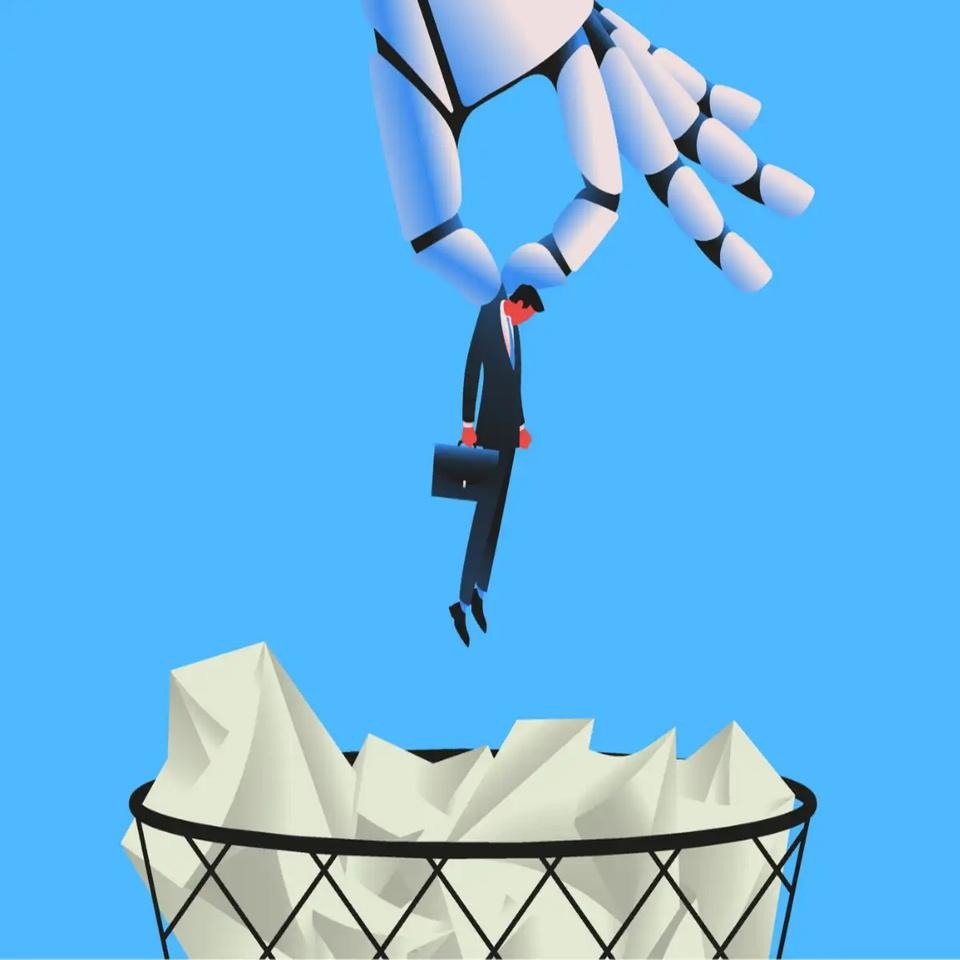
There is a quieter conversation happening behind the press releases and productivity reports, one that rarely makes it into the corporate messaging about AI’s transformative promise. It is the conversation workers have with themselves on Sunday nights, before another week of sharing an office with software that never calls in sick, never asks for a raise, and never needs a lunch break.
For decades, labor scholars warned that the greatest threat to worker dignity would not come from machines that replaced humans outright, but from machines that made humans feel replaceable while still keeping them employed. That moment, it seems, has arrived.
The shift is subtle but corrosive. Companies do not always fire people when they bring in AI. They simply stop seeing the people they kept. Output that once required a team of five is now expected from a team of two, with algorithms quietly absorbing the difference. The workload does not shrink. The headcount does. And the remaining workers are left to measure their own value against a system that operates at a speed and scale no human can match. Now, employees are met with rolling eyes every time they need a day off, an extension on a deadline or have a family emergency, for their new work partner don’t have the unique emergencies humans have and seem, because of it, more reliable and hardworking. Demands are greater than ever and conditions are worse than they have been for a long time, and research shows it’s a direct response to AI integration in companies.
Mayara Fernandes, an Advertisment student and worker shared her experience with AI in the workplace as “illuminating in all the negative ways”. She was working for a tourism company in mozambique working 12-14 hours a week when she was asked by her employer to reduce her work hours, specially during content creation and design development. Her employer said “Just use chatGPT, it’s faster”. Upon refusing to use AI tools to make her content, her employer responded saying that “It’s no big deal; Just use it (…) If you want to do them (designs) yourself, at least be quick about it”. The experience made her fear for her job but mainly made her see, in her words “how employers, due to AI usage, view workers nowadays as machines, or at leats want us to operate like one” When asked if she would ever worked for a company with the same values, she answered “All companies I’ve worked for are like that.”
Joaquim Da Silva, a content creator for a Finance Consulting Firm expressed how bored and unecessary he feels in his own department, now reduced to 4 against the initial 9 “I spend half my day editing content I didn’t write, fixing errors that sound just like me but aren’t. It’s a strange kind of erasure.” but he with the job market conditions, he knows he can’t simply quit his job, a struggle he has seen personally “My sister has been unemployed for over 5 months and was fired by her previous job because she took ‘too many sick days’. She has an autoimmune disease.” he explained.
It seems to many that the more human you are, the less valuable you seem for a company. It is not a surprise that as a culture, we see more workers suffering from burnout, stress, insomnia and other problems heavily influenced by their work conditions.
What is emerging, across industries and income brackets, is a new category of worker: technically employed, functionally devalued. Professionals who spent years cultivating expertise now find that expertise partially automated if not completely erased. The graphic designer who once charged for a visual concept now competes with a tool that generates fifty versions in forty seconds. The junior lawyer who built their career on research finds that skill absorbed by a platform that reads case law faster than any human alive. They still have jobs. But the architecture of those jobs has shifted beneath them, and no one sent a memo.
Corporate culture has responded with language that is well-intentioned and, to many workers, profoundly hollow. ‘AI will free you to do more creative work,’ the talking points suggest. But creative work, by its nature, requires volume, practice, and iteration, precisely the lower-stakes tasks now assigned to machines and slowly forgotten by those who spent years learning them. You do not arrive at insight without the journey. Removing the steps does not accelerate growth; it shortcuts the very process by which humans develop judgment and craft. And it shows, from college halls to company parties: more and more, cognitive load for basic problem resolution increases, while perfomance, creativity and critical thinking decreases amongst those who use AI tools over a long period of time, shown by recent studies.

There is also a structural irony at the center of this moment. The workers most enthusiastically encouraged to “embrace AI” and “reskill” are often those with the fewest resources to do so. Retraining programs cost money and time. They require access to education, digital literacy, and job markets willing to absorb newly credentialed workers in their forties and fifties. For Miranda, the television producer, or the countless others like her, “going back to school” is not a roadmap but a consolation prize dressed as advice. How many more like her will exist in the near future, one wonders, as AI slowly penetrates even the most impenetrable professions.
“I couldn’t believe what I heard. It must be some kind of sick joke, I thought” said Karina Langdon on a reddit post, highschool teacher at Ohio when she heard she was expected to use AI in class to improve personalized teaching “My kids have different needs, yes, but how will a computer undertand them better than me, their teacher of 3 years?”
What is missing from the mainstream conversation is not information about AI’s capabilities, comapnies and articles love to boast about them on a daily basis. It is a serious reckoning with what work means to people beyond its economic function. Professions are built on the identity it provides, the community it creates, the sense that one’s efforts matter and are seen. These are not inefficiencies to be optimized away. They are as human as breath, and no one wants artificial air.
The companies investing billions in artificial intelligence are not, by and large, malicious but rather unethical and harmful to their workers and the expectations put on them. And the harm accumulating in breakrooms and offices across the world are real, measurable in ways that do not show up in quarterly earnings but surface unmistakably in the faces of people who once loved what they did for a living.
The question was never really whether AI would take anyone’s job. The deeper question, the one workers have been muttering while writting another prompt, is whether, in a world reshaped by artificial intelligence, there will be room for the irreducibly human. It’s crystal clear for the avarage Joe that the more we humanize AI and invite it into our workplaces, not as a tool but as a coworker, the more de-humanizing conditions human workers experience.
When it comes to AI and the de-humanization of humans, the workplace of today presents immediate concerns to all, but none feel more discouraged than the young workers that have recently joined the work sphere and the recent graduates that see their jobs taken away by Artifical intelligence.
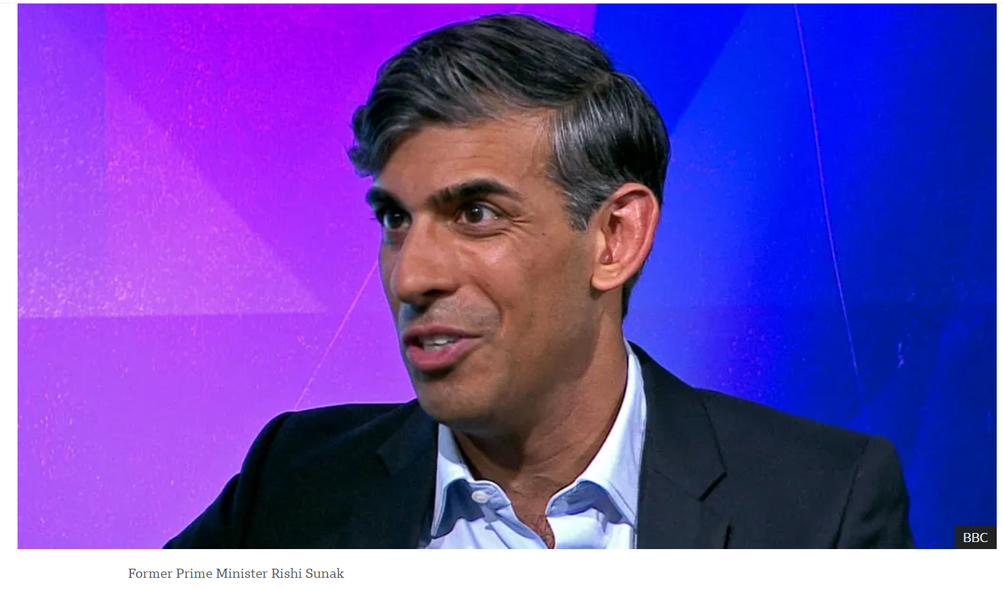
This is not just seen by young adults talking amongst themselves on social media. Artificial intelligence (AI) is flattening the jobs market for young people and even former British prime minister Rishi Sunak acknowledges it.
Sunak, now an adviser to AI firm Anthropic and Microsoft, said while he is an enthusiast for the transformative impact of AI, he said concerns from graduates looking for entry level jobs were justified. He said company bosses were privately acknowledging to him that recruitment of young people is flattening because of the technology and he is not the only one seeing this pattern.
“The job market is really sluggish right now,” said Daniel Zhao, the chief economist at Glassdoor, a workplace review company. “Entry-level workers are finding it difficult right now to get their foot on the ladder at all.”
For many young would-be workers, that has translated into taking jobs they never imagined after earning a four-year degree, from retail work, dog walking and other part-time jobs without benefits. Some have remained unemployed months or years after graduating. Oluwatobi Olabode, 4th year student at EUL university fears for his upcoming future, as more and more companies choose AI models to take the place of entry level workers “From a economic point of view, it makes sense: Companies cut costs by cutting workers, but its also scary. 4 years ago, with my degree, a job was garanteed” said the future Computer Engineer “Now even if I had a masters, I’m not sure I would get a job soon.”
The irony is not lost on those who spent years and thousands of dollars preparing for careers that were quietly being dismantled while they sat in lecture halls, and using the tool that would soon erse their value in the work market to make their assignments. An entire generation was told, with remarkable consistency, that education was the surest path to economic stability. Study hard, graduate, and the doors will open. What nobody mentioned was that something would be locking those doors from the inside while they walked across the stage to collect their diplomas.
The numbers are beginning to reflect what young workers have felt for some time. Entry-level job postings in fields like marketing, writing, data entry, paralegal work, and basic software development have dropped significantly in recent years, a contraction that coincides almost precisely with the mainstream adoption of generative AI tools. These were never glamorous positions, but they were foundational to any young worker who dreamt of stability, success and growth. Now these entry-level job opening have been quietly removed and young adults fear they will never get ahead, as more and more rejection e-mails pile up.
What makes this generation’s predicament uniquely painful is the absence of an obvious alternative. Previous generations facing technological displacement could pivot to adjacent trades. The transitions were difficult, but the pathways existed. Today’s displaced graduates face a landscape where AI is not targeting one industry or one skill set, but rather, it is expanding horizontally across virtually every white-collar profession simultaneously.
The social consequences are already surfacing. Young adults delaying financial independence, moving back in with parents, and postponing milestones such as homeownership, marriage, children, most milestones that previous generations treated as the natural byproducts of a working life. As of early 2026, the median age for first-time homebuyers in the U.S. has hit a record high of 40 years old. A generation that was already grappling with the economic scars of a global pandemic is now absorbing a second, quieter disruption and, unlike the pandemic, this one does not come with a defined end date or a promise of return to normal. This is the new normal, and no young or old worker can face it with just guts and optimism.
Perhaps most troublingly, the young workers are losing the chance to become. The entry-level position is where a person discovers not just how to work, but who they are as a worker. Strip that formative experience from an entire generation, and the consequences will not show up in this quarter’s earnings report. They will show up in a decade, in managers who were never mentored, in leaders who were never led, in industries that forgot how to grow their own and creators that get their ideas from AI chatbots.
What we owe workers is not Money

The debate around artificial intelligence has, for too long, been conducted in the language of inevitability. Progress is coming, the argument goes, and those who cannot keep up will be left behind as if being left behind is a personal failure rather than a systemic one. But the voices collected here tell a different story. Miranda, still waiting for the phone to ring. Mayara, told to be quick about it. Joaquim, erasing himself one edited paragraph at a time. Oluwatobi, diploma in hand, staring at a door that was not there when he enrolled. These are not casualties of their own inability to adapt. They are casualties of a transition being managed entirely on the terms of those who profit from it. They are not lazy, hard to work with or stuck up wprkers as the media often portraits the young workers of today. They are endlessly trying to succeed in an environment that thrives from their downfall.
There is no law requiring a company to tell a worker that an algorithm has absorbed half their role. There is no severance for the slowly irrelevant. There is no union for the functionally devalued. And there is, as yet, no law build to protect workers from the damage they suffer, rather they are work conditions, unemployment or job loss, from artificial intelligence integration in companies and industries. What exists instead is a chorus of corporate reassurance and a job market that grows quieter for the young with every passing quarter.
The workers who were interviewed or voluntarily shared their experiences online are not asking for a handout or more money. They are asking for the opportutinity to use their diplomas, for fair work loads and conditions, recognition and acceptance of the one trait they cannot escape from – their humanity, the same trait their employers want to give the messages and projects made by AI.
Work, at its core, has never been only about output. It is about showing up, being seen, earning trust, and building something that outlasts the hours spent building it. Those things cannot be automated and should not be discarted if you are trying to build a real and safe work environment. But right now, quietly and efficiently, they are being discarded every day, and so are workers.
The question is not whether AI will change the world of work. It already has and there is no way to stop it. AI is still a valuable tool, but it shouldn’t be seen as a valuable worker. The worker is the person that leaves their children at home and heads to the office, that shakes hands with investors and sweats before a meeting. It is the teacher sticking a smily face in each paper and the designer that works overnight to make a poster exactly as the client invisioned it. It is not a prompt, or a chatbot.
The heart of a company should, therofore, be only those who have hearts.