


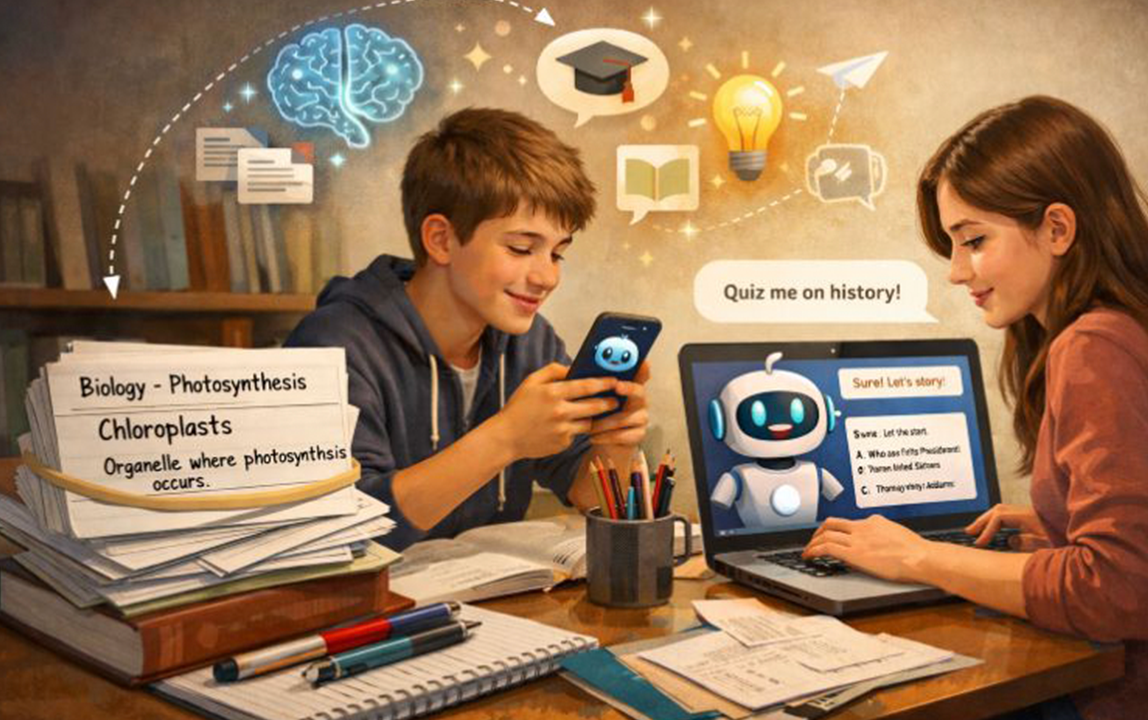
Late-night study sessions no longer look the way they used to. Instead of flipping through textbooks or rewriting notes by hand, many students have now turned to artificial intelligence as their newest study partner. From high school classrooms to university libraries, AI tools have changed how learners prepare for exams—making studying faster, more personalized, and, for some, less stressful.
One of the most common ways students use AI is for on-demand explanations. When a concept in math, chemistry, or history doesn’t make sense, students can ask an AI tool to explain it in simpler terms, provide examples, or even walk through a problem step by step. Unlike traditional resources, AI doesn’t get tired or impatient, allowing students to ask the same question repeatedly until they can easily understand it.
AI is also becoming a powerful tool for creating study materials. Students upload their notes or textbook chapters and ask AI to generate summaries, key-point lists, flashcards, or practice questions. This saves time and helps students focus on understanding instead of organizing information. Some learners even ask AI to quiz them, simulating exam conditions with timed questions and instant feedback.
Another growing use is personalized study planning. AI can help students break large topics into manageable schedules based on deadlines, strengths, and weaknesses. For students busy with many subjects, part-time jobs, or extra activities, this kind of planning can make exam preparation feel more achievable.
Language and writing support is another major draw. Students studying literature, history, or foreign languages use AI to brainstorm essay ideas, improve grammar, or practice translations. While most educators emphasize that AI should not replace original thinking, many students see it as a helpful editor or brainstorming partner rather than a shortcut.
However, the rise of AI in studying also raises important questions. Schools and universities are increasingly discussing academic integrity, as the line between “help” and “cheating” can sometimes blur. Many educators now stress responsible use, encouraging students to use AI to learn, not to submit AI-generated work as their own.
Despite these concerns, it’s clear that AI is becoming a permanent part of modern education. For today’s students, studying with AI isn’t about avoiding effort; it’s about working smarter. As exams grow more competitive and time becomes more limited, AI is quickly transforming from a novelty into a normal, and often invaluable, study tool.
— Written by Bongiswa Nkwanyana